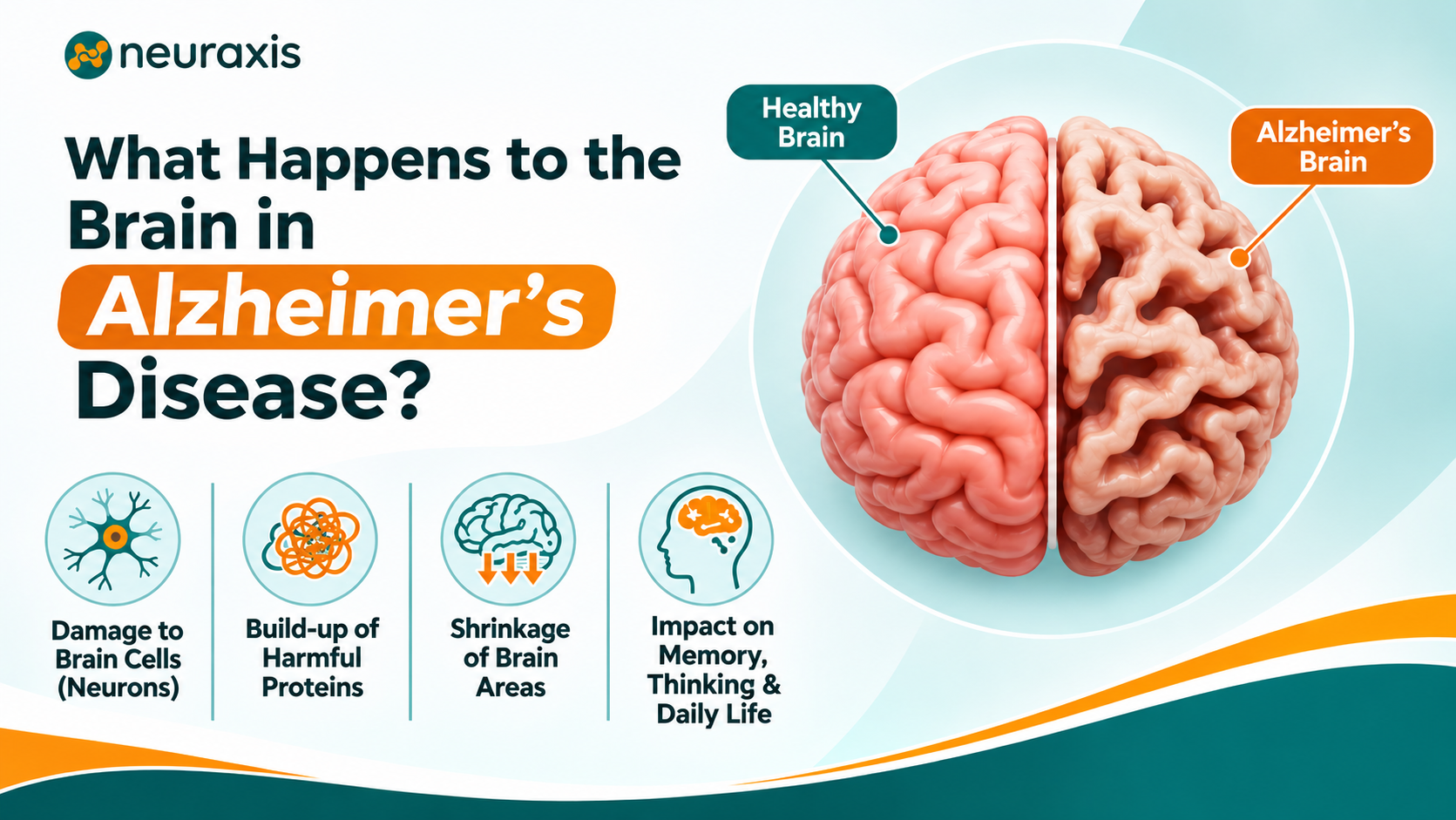
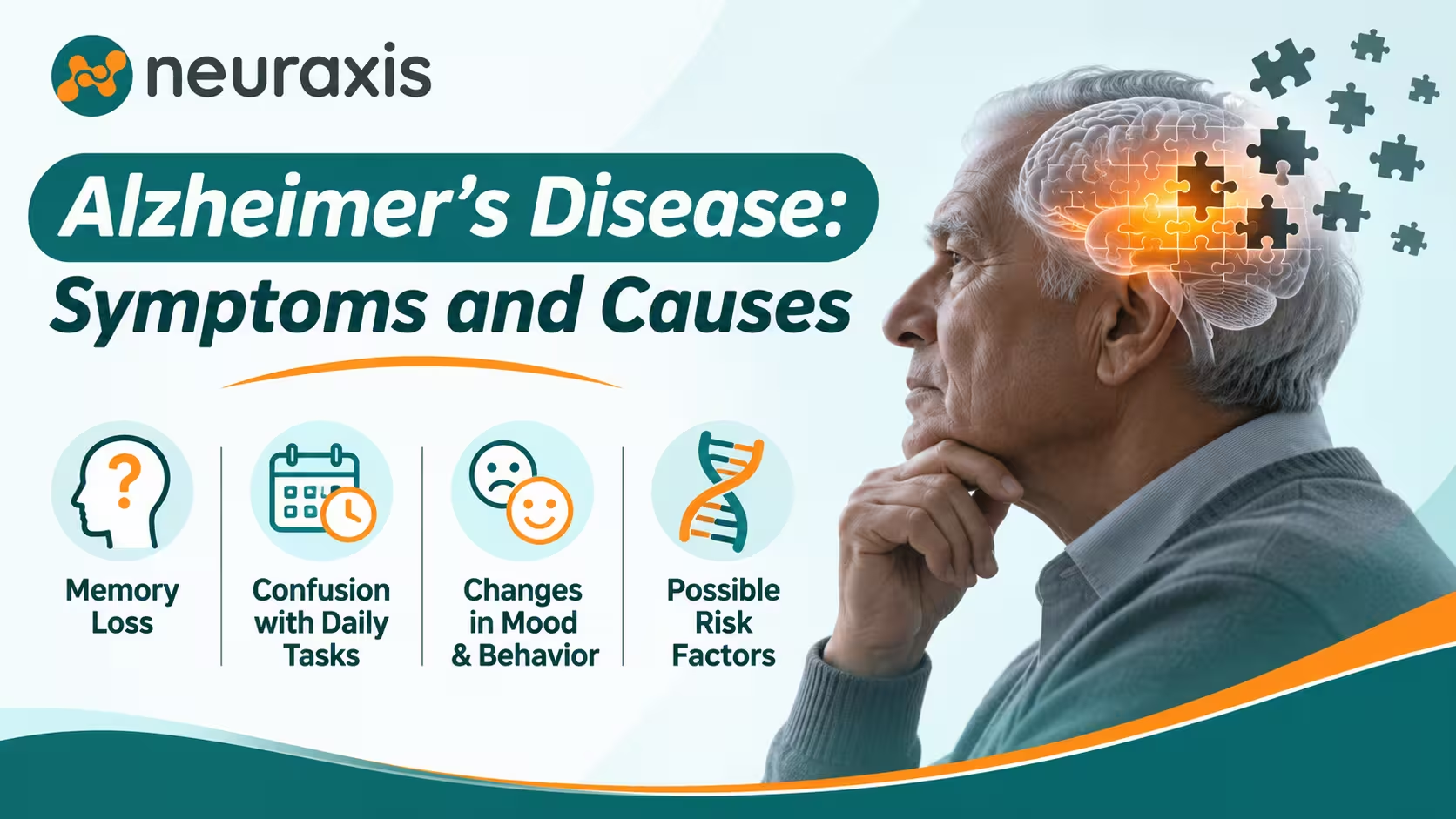
Alzheimer's disease is a progressive neurodegenerative brain disorder and the most common cause of dementia, accounting for 60% to 70% of all cases. It slowly destroys memory, thinking skills, and the ability to carry out simple daily tasks.
What Is Alzheimer’s Disease?
Alzheimer’s disease is a progressive condition that affects the brain and is the leading cause of dementia. It gradually damages memory, thinking abilities, and behaviour, making everyday tasks increasingly difficult. Alzheimer’s is estimated to account for around 60% to 70% of dementia cases.
The disease develops gradually and becomes more severe over time. In the early stages, a person may forget recent conversations or events, repeat questions, or have difficulty finding the right words. As the condition progresses, memory and thinking problems can increasingly affect daily activities and independence.
Alzheimer’s disease is not a normal part of ageing. Although it is more common in older adults, it can also develop in people younger than 65 years, which is known as early-onset Alzheimer’s disease. Early diagnosis and appropriate Alzheimer’s disease treatment can help manage symptoms and support a person’s quality of life.
What Are the Early Symptoms of Alzheimer’s Disease?
It is usually noticed when the patient starts forgetting things from their immediate surroundings.
The common symptoms of Alzheimer’s disease include:
-
Forgetting recently had conversations or activities.
-
Frequently repeating the same questions.
-
Misplacing things and forgetting the location of the misplaced things.
-
Forgetting important appointments or dates.
-
Having difficulties handling bills at home.
-
Trouble in following recipes.
-
Confusion about familiar places.
-
Trouble remembering words to express their thoughts.
-
Being overly anxious, annoyed, or withdrawn.
These signs may not seem like anything much initially. However, the family may notice them before the patients do.
How Is Alzheimer’s Memory Loss Different From Normal Ageing?
Normal ageing could have an impact on how quickly a person learns and recalls information. A person can forget a name but then remember it after some time.
Memory problems linked to Alzheimer's disease usually disrupt daily activities. An individual will forget whole conversations and ask repeated questions that have already been answered.
A person may also be placing items in odd places and unable to backtrack. Getting lost while taking a familiar route is one such sign.
Any repetition calls for medical attention. It should not be dismissed as normal ageing.
What Causes Alzheimer’s Disease?
The exact cause of Alzheimer’s disease is not fully understood. However, scientists believe it develops due to a complex combination of brain changes, abnormal protein buildup, genetic factors, lifestyle, and environmental influences.
In Alzheimer’s disease, abnormal changes gradually affect brain cells and the way they communicate with one another. Over time, these changes can damage nerve cells and lead to their loss, affecting important functions such as memory, learning, thinking, and daily activities.
Factors such as increasing age, certain genetic risks, and overall health and lifestyle factors may also influence a person’s likelihood of developing Alzheimer’s disease.
1. Changes in Brain Proteins
Two proteins have been associated with Alzheimer’s disease. They are amyloid and tau.
-
Amyloid plaques: Amyloid proteins tend to build up between brain cells. Such buildup could affect the communication of the brain cells with one another.
-
Tau tangles: The tau protein is supposed to help with the formation of brain cell structure, but in people with Alzheimer’s disease, they are known to form tangles within brain cells.
2. Older Age and Family History
Age is among the most important risk factors when it comes to Alzheimer’s. As age advances, the risk increases, but it does not mean that every person will develop the condition.
The fact that one has a family member who has been diagnosed with the condition is a risk factor that increases the chances of having Alzheimer’s. People with a family member who has the disease have a high chance of developing the condition.
But it does not mean that because one has a relative with Alzheimer’s, he or she is sure to develop the disease.
3. Genes
Certain genes can contribute to the development of the disease. One of these genes is called APOE ε4.
The presence of such a gene does not mean that a person will definitely develop the disease. It just means that there is an increased risk of developing it.
There are some rare inherited mutations in the genes that lead to the development of Alzheimer’s at a young age. They account for a small number of all cases of the disease.
4. Other Health Problems and Lifestyle Factors
Some health problems may increase the risk of memory decline. These include:
-
High blood pressure.
-
High cholesterol.
-
Diabetes that is not well controlled.
-
Smoking.
-
Heavy alcohol use.
-
Lack of physical activity.
-
Untreated hearing loss.
-
Poor sleep or untreated sleep problems.
-
A history of serious head injury.
These factors do not cause Alzheimer’s in every person. Some affect blood flow and general brain health. Managing them can help protect overall health.
What Are the Stages of Alzheimer’s Disease?
Alzheimer’s gets worse over time, but it does not progress at the same speed in everyone. Doctors often describe it in three broad stages.
Early Stage
Memory problems become easier to notice. The person may forget recent events, miss appointments, or struggle with planning.
Most people can still manage many daily activities on their own. They may need reminders or some help with difficult tasks.
Middle Stage
Memory and thinking problems become more noticeable. The person may need help with cooking, dressing, taking medicines, or handling money.
Changes in sleep, mood, and behaviour may also appear. Some people become restless or confused in familiar surroundings.
Late Stage
Most of the day-to-day functions may be difficult for him. This includes eating, bathing, dressing, and walking.
Communicating may also prove to be tough. There are chances of developing problems like difficulty swallowing and catching infections.
The duration of the stages varies. The doctor will be able to help the family to understand the needs of the patient in each stage.
How Is Alzheimer’s Disease Diagnosed?
A doctor cannot confirm Alzheimer’s through one memory test alone. The diagnosis usually involves questions about symptoms, a medical checkup, and tests to find the reason for the memory problem.
A neurologist may recommend:
-
Medical history: The doctor asks when the memory problems started and how they affect daily life.
-
Memory tests: Simple questions and tasks help check memory, attention, language, and thinking.
-
Physical and nerve examination: This helps check for other possible problems.
-
Blood tests: These may find conditions such as thyroid problems or vitamin deficiencies.
-
Brain scans: MRI or CT scans may help rule out other causes of symptoms.
-
Specialised tests: In some cases, tests for Alzheimer’s-related proteins may be advised.
Memory problems do not always mean Alzheimer’s. Poor sleep, depression, some medicines, and vitamin deficiencies can also affect memory. Finding the cause helps the doctor plan the right care.
Can Alzheimer’s Disease Be Treated?
There is no cure for Alzheimer’s at present. But treatment can help manage some symptoms. Certain medicines may also slow the decline in some people with early-stage disease.
The right treatment depends on the person's symptoms, overall health, and stage of the disease.
Medicines for Memory and Thinking Problems
Doctors may prescribe medicines such as donepezil, rivastigmine, or galantamine. These may help some people manage memory and thinking problems.
Memantine may be used in some patients with moderate to severe Alzheimer’s.
These medicines do not cure the disease. They may help with symptoms for some time. The doctor decides which medicine is suitable and checks for side effects.
Medicines That May Slow the Disease
Some relatively new medications act on the amyloid protein in the brain. These are lecanemab and donanemab.
These may help to prevent the decrease in the ability to think and remember things for some patients at the beginning stages of Alzheimer’s. These medicines are not suitable for everybody, and they may have many negative side effects such as brain swelling or hemorrhage.
It is necessary to consult an expert on whether these medications will suit you.
How Can Families Help at Home?
Small adjustments will make life easier for a person suffering from Alzheimer’s disease.
-
Stick to regular meal times and regular sleeping times.
-
Put things like keys, glasses, and anything else commonly used in fixed places.
-
Use a calendar and reminder notes.
-
Organize medicines and supervise when necessary.
-
Remove anything that could result in the patient falling.
-
Speak in calm tones and use clear instructions.
-
Encourage hobbies, listening to music, and socializing.
Family members need to take some breaks and seek assistance from others as well. Taking care of a person suffering from Alzheimer’s is very exhausting.
Can Alzheimer’s Disease Be Prevented?
There is no sure way to prevent Alzheimer’s disease. However, some daily habits may help keep the brain healthy and lower the risk of memory problems.
|
Healthy Habit |
How It Helps |
|
Exercise regularly |
Walking and other physical activities help keep the body and brain healthy. |
|
Control blood pressure and diabetes |
Keeping these problems under control supports brain health. |
|
Eat healthy food |
Include fruits, vegetables, nuts, pulses, and whole grains in daily meals. |
|
Avoid smoking |
Smoking can harm blood vessels and affect brain health. |
|
Sleep well |
Proper sleep supports memory and brain function. |
|
Stay socially active |
Spending time with family and friends helps keep the mind engaged. |
|
Keep your brain active |
Reading, solving puzzles, and learning new things keep the mind active. |
|
Get hearing problems checked |
Treating hearing difficulties may help support brain health. |
|
Prevent head injuries |
Wear helmets and seat belts to protect your head. |
These habits cannot guarantee that Alzheimer’s disease will be prevented. However, they can support better brain health and overall well-being as a person gets older.
Conclusion
Memory loss that repeatedly affects daily life should not be ignored. While the symptoms of Alzheimer’s disease may develop gradually, they can become more severe over time and affect memory, thinking, behaviour, and independence. Consulting a doctor can help identify the possible cause and guide appropriate care.
If you or a loved one is experiencing persistent memory problems, seeking timely evaluation from the Best Neurologist in Gurgaon can help with proper assessment and guidance. With 10+ years of experience in Neurology, Dr. Sameer Arora provides neurological evaluation and guidance for a range of neurological concerns. Visit Neuraxis to learn more about neurological care.
Frequently Asked Questions
1. At what age can Alzheimer’s disease begin?
Alzheimer’s usually occurs after 65 years old. But it can develop earlier as well. If someone gets Alzheimer’s disease before reaching 65 years old, then this is known as early-onset Alzheimer’s disease.
2. Does Alzheimer’s disease equal dementia?
Not at all. Dementia is the loss of mental abilities such as memory and thinking skills. Alzheimer’s disease is an illness that leads to dementia. Other diseases lead to dementia.
3. Does the Alzheimer’s patient forget about his relatives?
Sometimes he may forget his relatives because of this illness. Not necessarily at the same stage for everybody.
4. Is forgetfulness an indication of Alzheimer’s disease?
No. Forgetfulness may be caused by stress, lack of sleep, depression, some medications, thyroid issues, and vitamin deficiencies. Consult your physician to find out the cause.
5. What is the name of Alzheimer’s disease?
Many people are looking for the meaning of “What is Alzheimer's?” Simply put, Alzheimer’s disease is a disease that affects one's brain and slowly damages memory and cognitive skills.