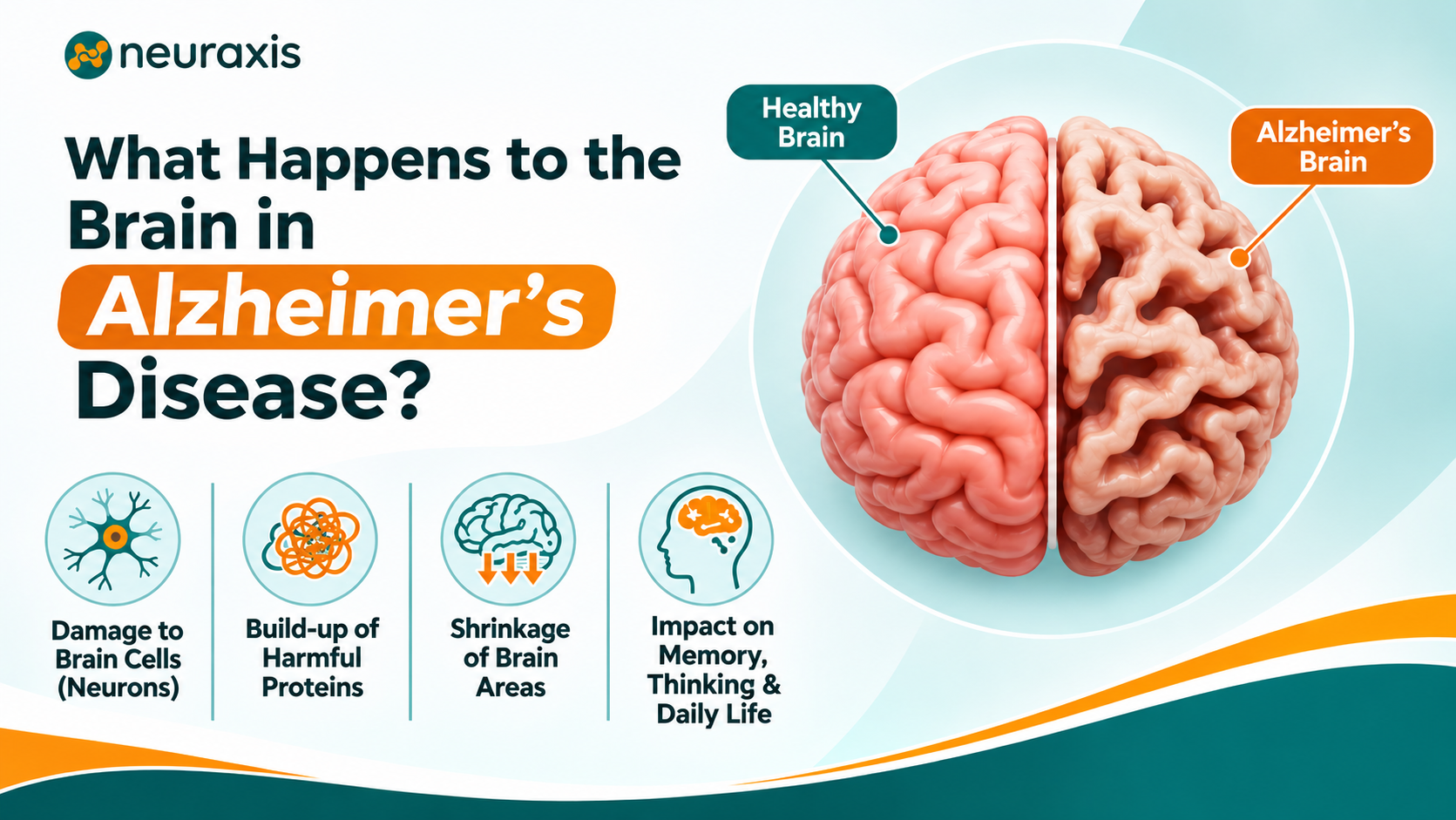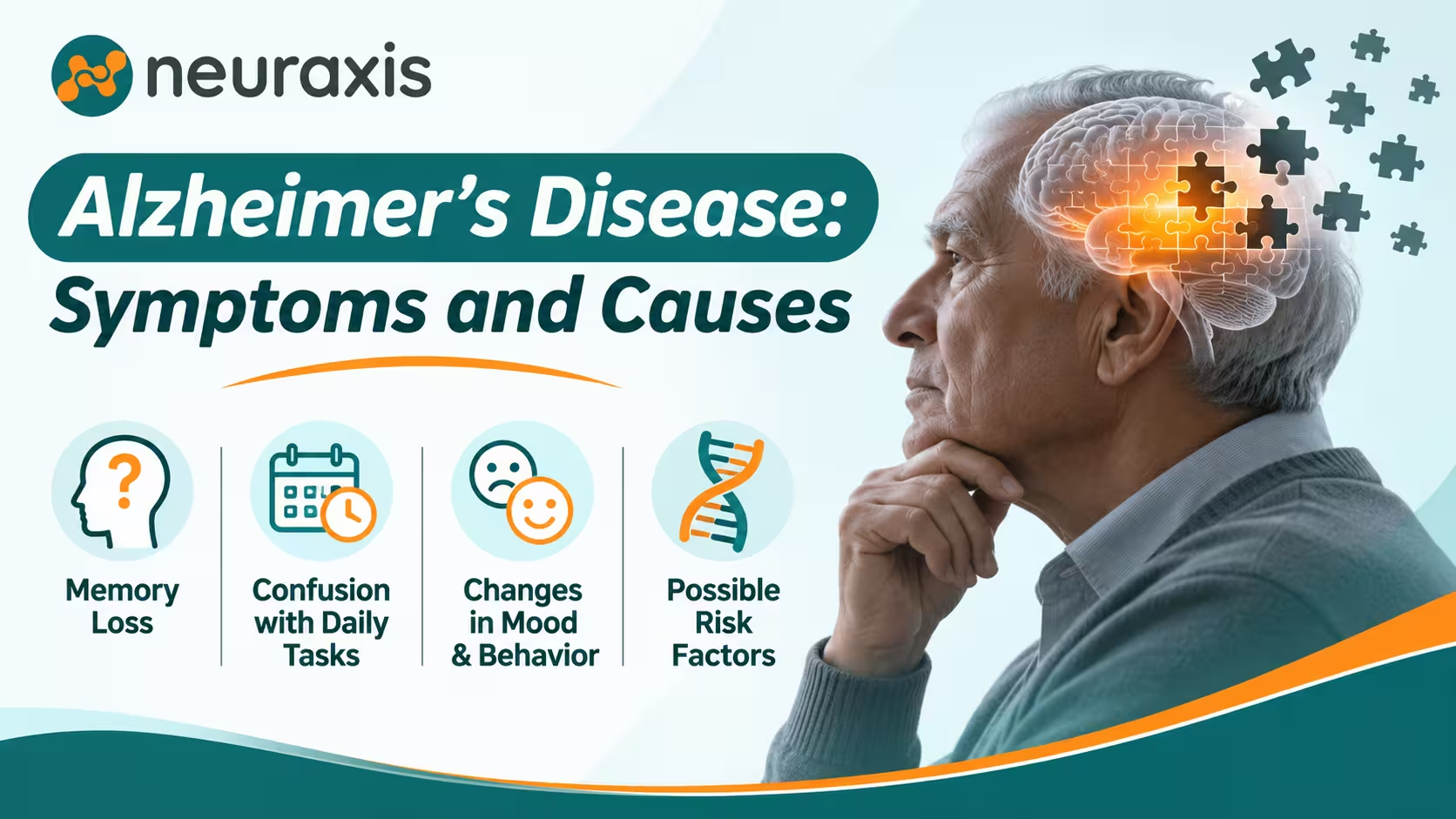

Increasing age is the greatest known risk factor for developing Alzheimer’s disease, although aging itself does not directly cause the condition. Most people diagnosed with Alzheimer’s are aged 65 or older, and after the age of 65, the risk generally increases significantly, approximately doubling every five years. The risk becomes even higher at advanced ages, particularly among individuals aged 85 and older. However, it is important to understand that Alzheimer’s disease and dementia are not a normal or inevitable part of aging, and many older adults never develop the condition.
Why Does the Risk Increase After 65?
The risk of developing Alzheimer’s disease increases significantly after age 65 because aging can cause gradual changes in the brain and reduce its ability to repair and protect itself. Over time, cellular damage and other risk factors may accumulate, making the brain more vulnerable to the disease.
- Cellular and Brain Changes: Brain cells and their connections may become less efficient.
- Vascular Changes: Reduced blood and oxygen flow can affect brain health.
- Protein Accumulation: Abnormal amyloid and tau proteins may build up in the brain.
- Genetic and Lifetime Factors: Genetics, cellular stress, and other health factors can increase susceptibility.
However, Alzheimer’s is not an inevitable part of aging. Many older adults maintain healthy memory and cognitive function throughout their lives.
How Much Does the Risk of Alzheimer's Increase With Age?
The risk of developing Alzheimer's increases with every subsequent generation of elderly persons. It is often said that the risk increases twice every five years starting from the age of 65 years.
For instance, the risk of developing Alzheimer's increases among persons aged 80 years compared to those aged 70 years.
The following figures are based on estimates from the United States:
|
Age Group |
People Living With Alzheimer's |
|
65–84 years |
About 1 in 13 people |
|
85 years and older |
About 1 in 3 people |
It helps understand the age trend from the numbers provided. It is a population-based estimate and not a forecast for the individual patient.
An 80-year-old individual may never suffer from Alzheimer’s disease. An individual may be suffering from the same at a younger age. Age influences the odds but does not predict the patient's risk of the disease.
Is Alzheimer's Disease a Normal Part of Growing Older?
No, Alzheimer’s disease does not belong to the aging process.
It is quite normal for some people to have some difficulties remembering things as they age. The person may sometimes have problems remembering the name of an individual, but then they will definitely remember the name after some time.
However, the memory loss due to Alzheimer’s disease is something completely different. This is persistent in nature and will eventually start affecting his/her daily activities.
Here are a few everyday examples:
|
Normal Age-Related Changes |
Possible Signs of Alzheimer's |
|
Forgetting a name but remembering it later. |
Repeatedly forgetting the names of familiar people. |
|
Occasionally misplacing keys. |
Putting things in unusual places and being unable to retrace steps. |
|
Missing an appointment once in a while. |
Regularly forgetting important dates and appointments. |
|
Taking longer to learn something new. |
Finding it difficult to follow familiar instructions or complete routine tasks. |
|
Searching for the right word occasionally. |
Frequently struggling to follow or take part in conversations. |
The issue does not simply concern the frequency of such forgetting on their part. It concerns the extent to which it has impacted their daily life and routines.
If you see any signs of these issues in your family member, it may be wise to consult a physician. It is no use waiting until the situation becomes critical.
Can Younger People Also Develop Alzheimer's Disease?
Yes. Alzheimer's in older adults occurs, but younger individuals may develop it too.
When Alzheimer’s disease occurs at an age of less than 65, it is called early-onset Alzheimer’s disease and is very rare compared to the late-onset form of this disease.
A patient in his 40s or 50s may attribute his poor memory to stress at work, lack of sleep, or other stressful situations. In some cases, this can be true. But when the symptoms recur, one should consult a doctor.
What Are the Early Signs in Younger Adults?
The first changes may affect work and family responsibilities.
A person may:
- Forget discussions held at work.
- Struggle to plan once-easy tasks.
- Have difficulty managing money or household expenses.
- Lose track of familiar routes.
- Repeat questions or forget recent information.
- Find it harder to express thoughts during conversations.
- Show changes in mood or behaviour.
These symptoms do not automatically mean early-onset Alzheimer's. A proper medical assessment is needed to understand what is causing them.
What Other Things Increase the Risk of Alzheimer's?
Age is a major risk factor, but it is not the only one. Family history, certain genes, and some long-term health problems can also affect a person's chances.
- Family history: A patient is more likely to have Alzheimer’s if a parent or a sibling has Alzheimer’s. But having a family history of Alzheimer’s does not necessarily mean the condition will be developed by the person.
- Genetics: An example of a gene mutation associated with Alzheimer’s risk is APOE ε4. People who have this type of gene mutation have increased chances of developing Alzheimer’s, although its presence does not mean a person has Alzheimer’s. Some genetic changes can cause Alzheimer’s in younger individuals.
- Hypertension and diabetes: Diseases like high blood pressure and diabetes can damage blood vessels over time. Inadequate blood flow can negatively impact brain function, increasing the likelihood of cognitive impairment.
- Cigarette smoking and excessive alcohol consumption: Both of them can influence blood vessels and brain functioning.
- Lack of physical activity: A sedentary lifestyle and lack of physical activity can contribute to conditions associated with cognitive impairment.
- Sleeping difficulties and hearing loss: Chronic sleep disorders and hearing loss are associated with an increased risk of dementia.
Having one or more of these Alzheimer's risk factors does not mean a person will develop Alzheimer's. They are reasons to pay attention to health and discuss concerns with a doctor.
Can the Risk of Alzheimer's Be Reduced as a Person Gets Older?
There is no guaranteed way to prevent Alzheimer's disease. Age and Alzheimer's disease-related genes cannot be changed. However, looking after general health may help reduce some of the risks linked to poor brain health.
|
Daily Habit |
What Can Be Done |
|
Physical activity |
Walk regularly or choose an exercise suited to age and health. |
|
Food habits |
Eat vegetables, fruits, pulses, nuts, and whole grains. |
|
Blood pressure |
Check it regularly and follow the doctor's advice. |
|
Diabetes |
Keep blood sugar under control. |
|
Sleep |
Maintain regular sleep timings and get ongoing sleep problems checked. |
|
Mental activity |
Read, play games, learn new skills, or take up a hobby. |
|
Social life |
Spend time with family and friends instead of staying isolated. |
|
Hearing |
Get hearing difficulties checked and use hearing support when advised. |
|
Smoking |
Avoid smoking and exposure to tobacco smoke. |
These steps cannot promise that Alzheimer's will be prevented. They are still useful habits to follow at any age.
When Should an Older Person Get a Memory Checkup?
A memory assessment may be needed if one experiences memory problems to the extent that they interfere with usual activities. People’s relatives usually observe changes before the individual recognizes the problem.
Look out for repeated difficulties including:
- Repeating a question several times.
- Failing to remember recently held conversations.
- Becoming confused in familiar places.
- Having trouble managing money and medications.
- Difficulty with performing usual chores at home.
- Changes in behavior, not characteristic of this individual.
The specialist may need to know more about your symptoms, previous illnesses, and lifestyle. In addition, you may need to take some memory tests and some blood tests. In case of necessity, the specialist will recommend to have either an MRI or a CT scan.
It should be noted that not all cases of memory problems may be connected with Alzheimer’s disease. Such diseases as thyroid gland dysfunction, malnutrition (vitamin deficiency), depression, sleep disorders, and certain medications can also impair one’s memory. However, in some cases, these problems are treatable.
Sudden confusion requires immediate medical care, especially if it is accompanied by weakness of one side of the body, trouble with speech, very severe headache, or loss of alertness.
Conclusion
Age is a major risk factor for Alzheimer's disease, especially after 65, but growing older does not necessarily mean a person will develop the condition. Persistent forgetfulness, difficulty with familiar tasks, or cognitive changes should not simply be ignored as a normal part of aging.
Dr. Sameer Arora, Director & Senior Consultant with over 10 years of experience in neurology, provides evaluation for memory and neurological concerns. If a family member is experiencing persistent cognitive changes, you may consult Dr. Sameer Arora, Best Neurologist in Gurgaon, for appropriate assessment and guidance.
Frequently Asked Questions
1. Do all individuals over the age of 85 have Alzheimer's disease?
No. Although it is common among the elderly population over 85 years old, it does not mean that everybody at that age has this disease.
2. Can one develop Alzheimer's disease when no one else in the family is suffering from the disease?
Yes. It is possible because various factors lead to the disease. One of them is age.
3. Is early-onset Alzheimer's disease different from the common Alzheimer's disease?
They both involve problems with memory and thinking, but the difference is the age at which the signs appear. Early-onset disease appears before 65 years of age, whereas Alzheimer's disease usually appears later.
4. Is an annual memory test appropriate for an elderly person?
This is not the same for everybody and depends on age, symptoms, medical history, and changes observed in the family.
5. Is it possible to diagnose Alzheimer’s disease based on a memory test only?
Not at all. It is used to measure cognitive function and memory. But a diagnosis can be made only after taking into account all symptoms, medical history, and examination.